

Overcoming Wedding Dress Price Objections: A Boutique Retailer’s Guide to Value Selling

Every bridal boutique owner knows the moment: a bride steps onto the pedestal, catches her reflection, tears well up, and the salon fills with collective gasps of admiration. Yet, the moment she turns to check the tag, the atmosphere shifts into tension and hesitation. For independent bridal retailers, navigating wedding dress price objections is one of the most critical daily hurdles.
To overcome wedding dress price objections without discounting, bridal stylists must differentiate between strict budget limitations and unperceived value by translating couture construction, bespoke fit, and styling versatility into emotional confidence and tangible comfort. When retail teams learn to address cost concerns through value elevation rather than panic discounting, they not only protect boutique profitability but also build deeper trust with discerning brides.
Diagnosing the Hesitation: Budget Mismatch vs. Unperceived Value
Before styling teams can address financial pushback, they must diagnose the true root of the hesitation. In bridal retail, price resistance generally falls into two distinct categories: a strict, immutable financial ceiling, or an unperceived value gap.
Handling bride budget objections effectively begins with active listening and calibrated discovery questions during the initial consultation. When a bride states that a gown exceeds her expectations financially, stylists should gently uncover whether the concern stems from cash flow constraints or sticker shock driven by a lack of textile knowledge.
Objection Type | Typical Bride Statement | Stylist Diagnosis | Recommended Sales Approach |
|---|---|---|---|
:--- | :--- | :--- | :--- |
Hard Budget Ceiling | "My absolute maximum is $2,500 including alterations; I simply cannot spend $3,800." | Fixed financial parameter, often funded by third parties (parents, partners). | Pivot gracefully to curated designs within target range without diminishing the bride's experience. |
Perceived Value Gap | "I love it, but $3,500 feels like a lot for a dress I will only wear once." | Emotional hesitation rooted in unfamiliarity with luxury construction and materials. | Educate on artisan construction, wearability, comfort architecture, and convertible styling options. |
Comparison Hesitation | "I saw a similar silhouette online or at another salon for half this price." | Lack of awareness regarding fabric quality, boning structure, and alteration complexity. | Highlight tactile differences, inner foundation support, and high-grade fabrication. |
When a bride experiences a perceived value gap, she is not saying "I cannot afford this"; she is asking "Why is this gown worth this investment?" Stylists trained in consultative bridal gown sales techniques recognize this question as an invitation to educate rather than a signal to drop the price.

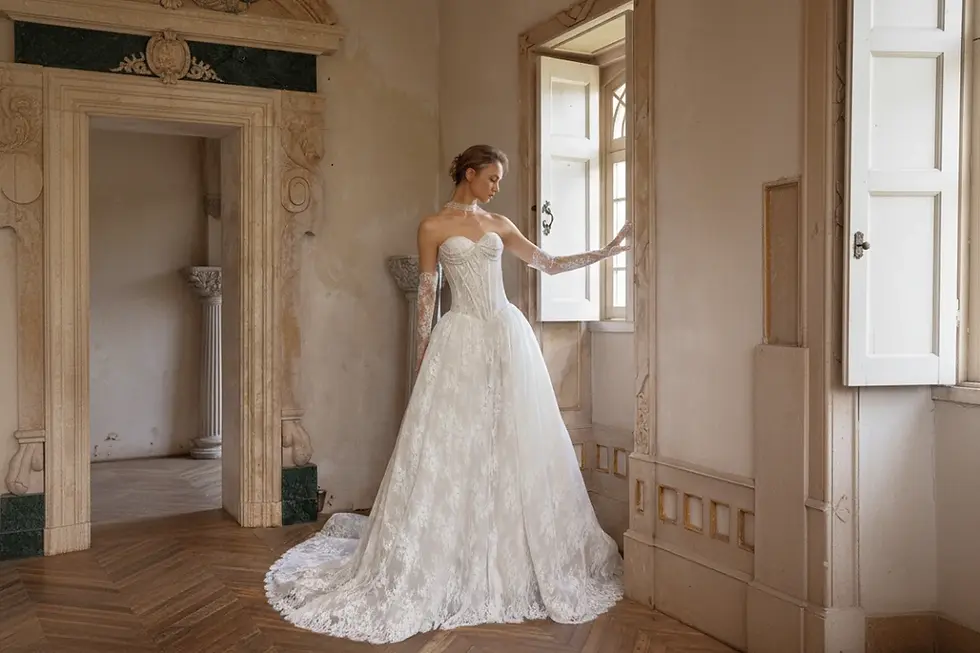
Showcasing close-up artisanal details like hand-sewn beading and French lace helps justify luxury price points to brides.
Translating Technical Craftsmanship into Bride-Centric Wear Experience
When selling luxury wedding dresses, simply listing technical specifications—such as French Chantilly lace, multi-layer horsehair trim, or steel spiral boning—rarely closes a sale. Brides do not purchase technical jargon; they invest in how those technical details will make them look, feel, and move throughout an eight-to-twelve-hour celebration.
To successfully resolve wedding dress price objections, stylists must bridge the gap between back-of-house manufacturing quality and the bride’s sensory, physical experience:
From Boning Structure to All-Day Posture and Comfort: Instead of saying, "This gown features 16-piece internal corsetry," frame it as: "The integrated corset architecture supports your torso entirely from the hips, meaning zero pulling, no hiking up the bodice during dancing, and effortless posture in every photograph without needing restrictive shapewear."
From Premium Silk Crepe to Crease-Free Fluidity: Instead of stating, "This is heavy 40mm silk crepe," explain: "This heavyweight silk moves like liquid as you walk down the aisle and resists creasing during transit and seated dinners, ensuring you look pristine from ceremony to send-off."
From Hand-Appliqued Lace to Seamless Photography: Explain that hand-placed motifs eliminate harsh seam lines, contouring the waistline visually and catching natural light dynamically on camera.
By framing couture elements around physical ease, silhouette confidence, and photo longevity, wedding dress price objections dissolve naturally as the bride perceives the tangible return on her investment.
Demonstrating Long-Term Value: Modularity, Fit Architecture, and Alteration Savings
A critical strategy in closing bridal sales without discounting is calculating the total cost of ownership. Many brides budget exclusively for the gown's retail sticker price, overlooking post-purchase alteration and accessorizing expenses. Savvy boutique owners use this reality to demonstrate superior value.
Precision Engineering Lowers Alteration Overhead
Mass-produced, lower-tier gowns often lack standardized grade rules and internal support, requiring extensive—and expensive—reconstructive tailoring. Conversely, luxury couture labels engineer gowns with balanced proportions, built-in cups, and accessible seam allowances. When presenting a higher-priced gown, explain how precision patternmaking often saves the bride several hundred dollars in complex alteration labor.

Demonstrating convertible designs and detachable overskirts illustrates versatile styling value for multi-look weddings.
Modular Versatility and the "Two-in-One" Advantage
Modern brides frequently seek multiple bridal looks—a dramatic, traditional aesthetic for the ceremony and a sleek, effortless silhouette for the reception. Showcasing convertible pieces is one of the most persuasive tools for overcoming wedding dress price objections.
Detachable Overskirts: Transform an understated column or trumpet gown into a regal ballgown for the processional.
Removable Sleeves and Capes: Offer two completely distinct styling moods without purchasing two separate gowns.
Reversible or Detachable Trains: Allow effortless transition into cocktail hour without heavy bustle strain.
When stylists demonstrate how a single, well-crafted modular gown fulfills the role of two separate designer looks, the bride perceives significant financial and styling value, reducing hesitation.
Effective Consultation Scripts to Guide Price Conversations with Confidence
When wedding dress price objections arise in the fitting suite, a stylist's tone and body language are just as vital as their words. Hesitation, defensiveness, or immediate apologies validate the bride's fear that the gown is overpriced. Stylists should maintain calm, empathetic posture and guide the dialogue forward.
Script 1: Addressing the "I Didn't Want to Spend This Much" Hesitation
Bride: "I absolutely love this dress, but it is $800 above what I planned to spend." Stylist Response: "I completely understand. It is natural to feel mindful of your investment. When you look at yourself in the mirror right now, how does this dress make you feel compared to the others we have tried on? The reason this particular piece sits at this price point is its internal hand-tailored corsetry and weighted silk lining—it creates this sculpted waistline effortlessly without requiring extra undergarments or heavy alterations. Let’s look at your total bridal vision and see if this gown eliminates the need for extra accessories or multiple outfits."
Script 2: Countering Online and Budget-Salon Price Comparisons
Bride: "I saw a lace A-line dress that looks very similar to this at another shop for half the price." Stylist Response: "Silhouettes can certainly look similar in photos, but the difference in bridal wear is entirely in the engineering and touch. Notice how lightweight this skirt feels when you turn, and how the internal bodice supports your bust without pinching. High-tier construction ensures the gown holds its shape through hours of sitting, hugging, and dancing. Our goal is to ensure you feel secure and comfortable all night, not just for the first five minutes on the pedestal."

Guiding brides through nuanced fabric textures and reinforced corsetry turns price discussions into value appreciation.
Protecting Boutique Margins: Why Relying on Discounts Devalues Your Experience
When faced with wedding dress price objections, inexperienced stylists often resort to offering quick discounts to secure the close. However, habitual discounting undermines boutique sustainability in several major ways:
Erosion of Brand Prestige: Offering an unprompted 10% or 15% discount signals to the bride and her entourage that your prices were artificially inflated, instantly diminishing perceived craftsmanship.
Margin Compression: Bridal retail operates on precise margins designed to support skilled stylist wages, sample maintenance, luxury suite ambiance, and dedicated customer service.
Devaluation of Designer Partnerships: Premium bridal designers invest years into textile sourcing and ergonomic tailoring; discounting their work undervalues the artistry behind the collection.
Instead of reducing gown prices, elevate the transaction value. If a bride is on the threshold of a purchasing decision, offer value-add incentives such as an accessory credit toward a veil, complimentary gown storage leading up to fittings, or a curated bridal preservation package. This protects the bottom line while leaving the bride feeling valued and celebrated.
Elevating your retail sales team’s ability to articulate garment value creates confident brides and sustainable profits. Explore Calista Couture’s retailer resources for explaining construction, versatility, and designer value. to equip your salon with the tools and insights needed to master every bridal consultation.
FAQ
What is the best way to respond when a bride says a gown is out of her budget?
Start by clarifying whether the objection is a fixed financial ceiling or hesitation about value. Ask open-ended questions about how the dress feels compared to others. If it is a value hesitation, explain the gown's internal support, comfort, and craftsmanship. If it is a strict budget limit, respect her boundary and pivot to carefully curated options within her price range.
Should bridal boutiques offer discounts to close hesitant brides?
Habitual discounting should be avoided as it erodes retail profit margins and devalues the boutique's curated brand image. Instead of reducing gown prices, offer value-add incentives such as veil credits, gown preservation kits, or personalized fitting amenities that preserve your margins while rewarding the bride.
How can bridal stylists explain why two similar-looking gowns have different price tags?
Direct the bride's attention to the internal architecture, fabric weight, and tactile feel. Explain that while silhouettes may appear identical online or from afar, luxury gowns feature superior internal boning, silk linings, ergonomic weight distribution, and durable tailoring that ensure comfort and structure throughout an entire day of movement.


Comments