
The New Bridal Partnership: What Boutique Owners Should Expect from Designers
- Calista Couture

- 3 days ago
- 13 min read
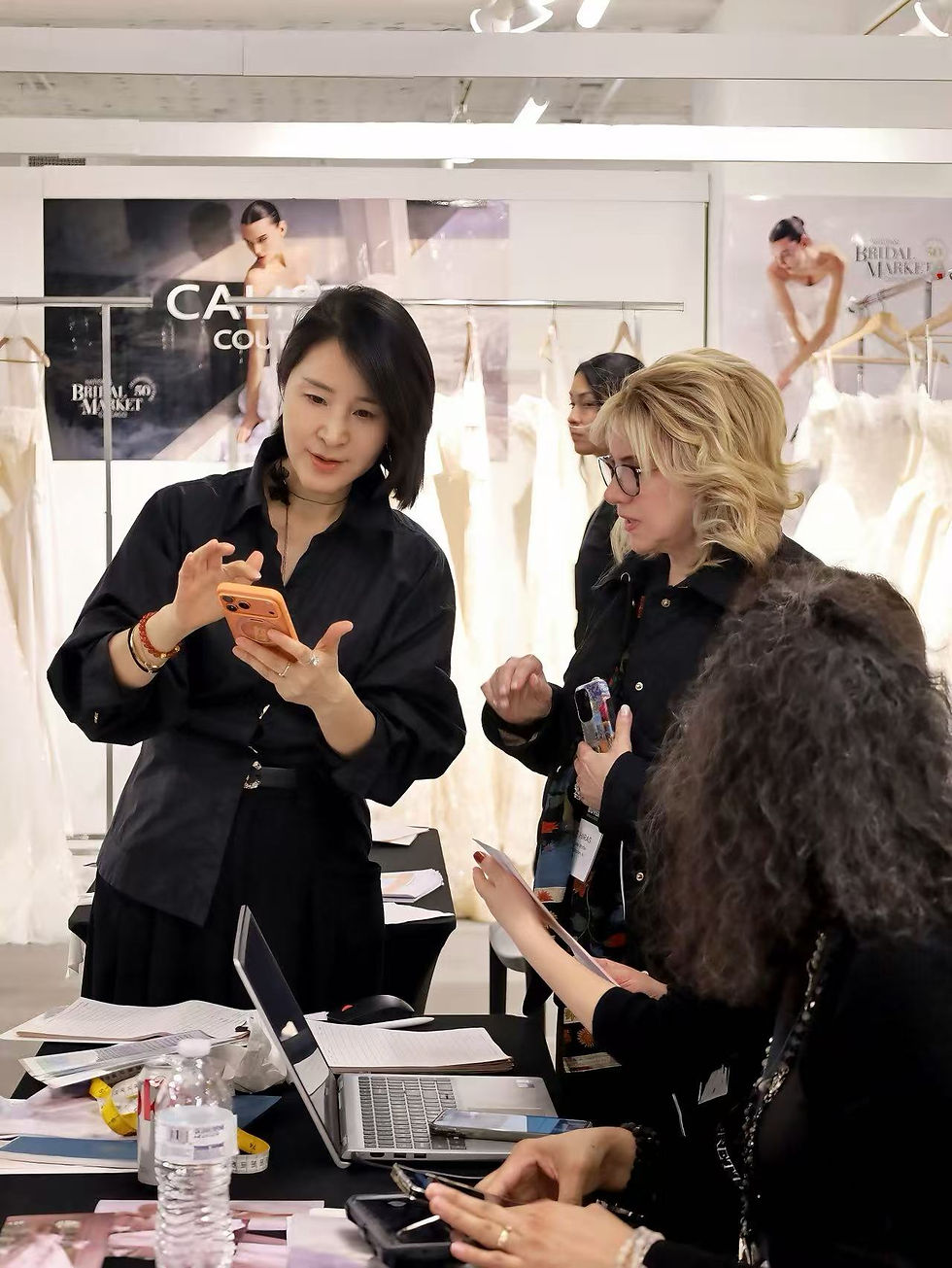
There is a moment I always notice at bridal markets.
A boutique owner steps into a booth, touches a gown sleeve, studies the bodice, checks the hem, then looks up with that expression I know very well.
It is not excitement yet.
It is calculation.
Not cold calculation. More like the mental math of someone who has seen enough pretty dresses to know that pretty is only the beginning.
She is thinking:
Will my brides understand this gown?Can my stylists sell it?Will the fit be reliable?Will this designer support me after I place the order?Will this brand help my boutique grow — or just ship me boxes and disappear?
That is the real question behind every wholesale buying decision.
And honestly, I respect it.
Because a bridal boutique owner is not just buying dresses. She is buying trust. She is buying stories for her stylists to tell. She is buying appointment moments. She is buying the possibility of a bride standing in front of the mirror and saying, “This is the one.”
That is why the old way of thinking about bridal wholesale feels too small now.
The new bridal partnership is not simply designer to retailer.
It is designer to boutique owner.Designer to stylist.Designer to bride experience.Designer to business growth.
A strong bridal designer partnership should feel less like a transaction and more like someone standing beside you, helping your boutique build a collection with purpose.
Let’s talk about what that should look like.
Why the Old Bridal Wholesale Model Is Not Enough Anymore
For a long time, bridal wholesale worked in a very simple way.
A designer showed a collection.A buyer picked samples.Orders were placed.Dresses shipped.Everyone moved on.
That still happens, of course. But the market has changed.
Brides are more informed. Social media has changed how they discover gowns. Boutiques are competing not only with other local stores, but also with online inspiration, designer websites, Pinterest boards, TikTok try-ons, and the very dangerous sentence every bride says at least once:
“I saw something like this online.”
Boutique owners are under more pressure than ever.
You need gowns that photograph well.You need gowns that fit real bodies.You need gowns that give stylists something to say.You need reliable delivery.You need pricing that makes sense.You need design that feels fresh without scaring away your core bride.
That is a lot to ask from one dress.
And it is even more to ask from one brand.
This is why the relationship between designers and boutiques has to become deeper, smarter, and more honest.
A modern bridal designer cannot just say, “Here is the collection.”
The better question is:
“How can this collection actually work for your store?”
What a Strong Bridal Designer Partnership Looks Like
A strong bridal designer partnership starts with listening.
That sounds simple. Almost too simple. But in bridal, listening is everything.
A boutique in Dallas does not always need the same sample strategy as a boutique in Portland. A luxury appointment-only salon may not buy the same way as a high-volume store with a busy Saturday floor. A boutique that serves classic Southern brides may need a different rack balance from a boutique known for modern minimalist gowns.
Designers should not treat every boutique like the same account number on a spreadsheet.
Boutiques have personalities.
Some are romantic and soft.Some are clean and architectural.Some are modest and family-centered.Some are fashion-forward and editorial.Some are practical, fast-moving, and commercial.Some are still discovering what their bride really wants.
A good designer partner should ask questions before recommending styles.
Not twenty annoying questions. Nobody needs an interrogation under fluorescent lighting.
But thoughtful ones:
What kind of bride books with you most often?
Which silhouettes sell best in your store?
What price range feels strongest for your market?
What are your stylists asking for more of?
What samples are sitting too long?
What do brides love online but hesitate to buy in person?
What kind of gown would help your boutique stand apart locally?
That is where partnership begins.
Not with a catalog.
With understanding.
Boutique Owners Should Expect Original Design, Not Just Another Version of the Same Dress
Let’s be honest.
There are a lot of wedding dresses in the world.
A lot.
Some days, when I look through bridal content online, I feel like I am watching the same gown walk in a circle wearing different earrings.
Pretty? Yes.Memorable? Not always.
Boutique owners should expect designers to bring a real point of view.
That does not mean every gown has to be dramatic. It does not mean every sample has to be risky. Original design can be quiet. It can be a clean neckline, a softened corset, a better sleeve proportion, a detachable detail, or lace placed in a way that makes the bride’s body look longer and more balanced.
Original design means the gown has a reason to exist.
A boutique collection should not feel like a storage room of white dresses. It should feel curated. It should have rhythm. It should have commercial pieces, emotional pieces, hero pieces, and a few gowns that make a bride say, “I have not seen this everywhere.”
That is one of the most important things a designer can give a boutique.
Not just gowns.
A point of difference.
Because when a bride remembers a specific dress, she often remembers where she tried it on.
That is boutique value.
Designers Should Understand the Boutique Floor
A wedding dress can look stunning in a campaign and still be difficult on a real boutique floor.
I know that sounds harsh.
But any experienced buyer knows it is true.
The boutique floor is where romance meets reality.
The bride may love the gown, but her mother may question the neckline. The stylist may need to clip it quickly. The lighting may not be perfect. The sample may be tried on by ten different body types in one week. Someone may step on the train. Someone may ask if sleeves can be added. Someone will absolutely ask if it comes in a different color, even when the answer is clearly in the lookbook.
This is bridal retail.
It is beautiful. It is emotional. It is occasionally chaos wearing perfume.
A designer who understands boutiques will think beyond the runway image.
They will consider:
Is the bodice supportive?
Is the gown easy enough for stylists to present?
Does the dress photograph well in store lighting?
Can brides understand the design quickly?
Does the sample hold its shape after repeated try-ons?
Are the design details meaningful or just decorative?
Can detachable pieces create more styling options?
Will the gown work for real appointments, not just editorial photos?
The best bridal designs are not only beautiful from ten feet away.
They work at the mirror.
That is where the bride decides.

Communication Should Be Clear, Human, and Fast Enough
Here is something nobody wants to say out loud:
A beautiful gown cannot make up for poor communication.
A boutique owner should not have to chase a designer or brand for every small answer.
Production updates matter.Delivery timelines matter.Size and customization questions matter.Photo and video support matters.Order details matter.
Because on the boutique side, one delayed response can create a nervous stylist, a worried bride, or a frustrated owner.
A strong bridal designer partnership should include clear communication before, during, and after the order.
Not robotic updates. Not vague promises. Not “let me check” disappearing into a mysterious cave.
Real answers.
Even if the answer is not perfect, honesty is better than silence.
In my experience, boutique owners do not expect every situation to be flawless. They know bridal is detailed work. Fabric, production, fittings, logistics — many hands touch one gown before it reaches the bride.
But they do expect responsibility.
They want to know the brand is paying attention.
And they should.
Designers Should Help Stylists Sell the Gown
A stylist is the bridge between the dress and the bride.
That bridge needs support.
When a designer sends gowns without giving the boutique any story, the stylist has to invent one. Sometimes she can. Great stylists are gifted that way. But why make her work harder?
A strong designer partner should help stylists understand what makes each gown special.
Not in complicated fashion-school language.
In words a bride can feel.
For example:
“This gown gives you a ceremony look and a reception look with detachable sleeves.”“The corset structure supports the waist without making the gown feel heavy.”“The lace is placed to soften the neckline and frame the collarbone.”“The clean skirt keeps the look modern, while the bodice adds romance.”“The overskirt creates a dramatic aisle moment, but the base gown still feels easy to wear.”
That kind of language helps stylists sell with confidence.
It gives them something better than “This is so pretty.”
Because brides hear “pretty” all day.
What they need is meaning.
A Good Bridal Brand Should Support Content Creation
The modern bridal boutique is also a content studio.
Maybe nobody told boutique owners this when they opened their stores, but here we are.
You are not only managing appointments, orders, alterations, trunk shows, staff training, bride emotions, and Saturday chaos.
You are also supposed to post Reels.
And TikToks.
And Pinterest pins.
And Instagram stories.
And maybe a behind-the-scenes video where everything looks effortless, even though someone moved a mannequin three times and the steamer made a strange noise in the background.
A designer partner should understand this reality.
Boutiques need more than product images. They need content support that helps sell the gown visually.
That may include:
Clean product photos
Short videos of movement
Detail shots of lace, corsetry, and detachable elements
Styling notes for social captions
Designer explanations
Trunk show assets
Suggested talking points for posts
Images that feel aligned with the boutique’s own brand
This does not mean the designer should control the boutique’s voice.
The boutique knows its own brides best.
But a thoughtful brand can provide materials that make content easier, faster, and more effective.
Because in today’s bridal market, the first appointment often begins before the bride ever walks through the door.
It begins on her phone.
Boutique Owners Should Expect Flexible Thinking
Every boutique has a different risk level.
Some stores are ready to bring in a bold new designer. Others want to test carefully. Some need a small opening capsule. Some want one standout gown first. Some need plus-size support. Some need clean commercial styles. Some are looking for detachable styling pieces that help their stylists create more value in the appointment.
A designer partner should not treat every order as one-size-fits-all.
Flexibility matters.
That does not mean a brand should say yes to everything. Boundaries are important. Production quality matters. Design identity matters. A brand that has no standards becomes difficult to trust.
But within a clear brand system, designers should help boutiques find the right path.
Sometimes that means recommending three styles instead of sending the full collection.
Sometimes it means suggesting a balanced first order: one hero gown, one commercial gown, one style with detachable impact.
Sometimes it means saying, “This dress is beautiful, but I do not think it is the best first sample for your store.”
That last sentence is important.
A real partner does not just try to sell more.
A real partner tries to sell what makes sense.
The Best Partnerships Protect the Boutique’s Identity
A boutique owner spends years building a reputation.
The store has a voice. A feeling. A customer base. A local market position.
A designer should not walk in and try to flatten that identity.
The goal is not to make every boutique look like the designer’s showroom.
The goal is to help the boutique become a stronger version of itself.
That may mean different things for different stores.
For a romantic boutique, it may mean soft lace gowns with better structure.For a modern boutique, it may mean clean silhouettes with subtle couture details.For a high-volume boutique, it may mean reliable commercial styles with strong visual value.For a luxury salon, it may mean more refined construction and editorial gowns.For a new boutique, it may mean lower-risk samples that still feel distinctive.
That is the beauty of a good bridal designer partnership.
It does not erase the boutique.
It sharpens it.
Designers Should Care About Sell-Through, Not Just Sell-In
This is a big one.
A brand can sell gowns into a boutique and call it success.
But boutique owners live with the samples after the invoice is paid.
They watch what brides try on.They hear what stylists say.They see what gets photographed.They know which gown gets compliments but no yes.They know which dress quietly becomes the staff favorite.They know which sample earns its place on the rack.
A designer should care about that.
Sell-in is the order.
Sell-through is the relationship.
If a gown is not performing, the conversation should not end there. The brand should be willing to understand why. Was it the wrong bride profile? Was the sample size not ideal? Did stylists need better talking points? Was the gown too close to something already on the rack? Did the photos not show the real value?
Sometimes a dress needs better storytelling.
Sometimes it needs the right bride.
Sometimes it was simply the wrong choice for that boutique.
That is not failure.
That is information.
And good partners use information.
Trust Is Built in the Small Details
In bridal, trust is not built only through big promises.
It is built in small details repeated over time.
A clear answer.A correct invoice.A good video.A well-packed gown.A realistic timeline.A useful suggestion.A designer who remembers what kind of bride your boutique serves.A brand team that follows up without sounding like a machine.
Small things.
But small things are not small when you are running a boutique.
Because your day is already full of tiny moving parts.
A bride is late. A sample needs steaming. A mother is crying. A stylist is double-booked. A package is arriving. Someone wants to know if a veil can be rushed. The phone rings. The door opens. The next bride walks in with six people and one very strong opinion.
Boutique owners do not need more noise.
They need partners who reduce friction.
That is what trust feels like.
Quiet support.
What Boutique Owners Should Ask Before Working with a Designer
Before starting a new bridal designer partnership, boutique owners should feel comfortable asking practical questions.
Not because you are difficult.
Because you are protecting your business.
Here are a few questions worth asking:
1. What makes your collection different?
A designer should be able to explain their point of view clearly.
If the answer sounds vague, the gowns may be harder for your stylists to position.
2. Which styles would you recommend for my boutique and why?
This shows whether the brand has taken time to understand your store.
A good recommendation should feel specific, not random.
3. What support do you provide after I place an order?
Look for communication, product information, videos, styling notes, and realistic delivery updates.
4. How do your gowns help stylists create a stronger appointment experience?
This is where details like detachable sleeves, overskirts, corsetry, lace placement, and silhouette variety become important.
5. What is your approach to fit and construction?
Beauty matters. But support, proportion, comfort, and wearability matter too.
6. How do you help boutiques lower first-order risk?
A thoughtful designer may suggest a focused opening capsule, commercial hero styles, or a small test before a deeper commitment.
7. Do you understand my boutique’s bride?
This may be the most important question of all.
A designer who understands your bride is easier to trust.
What Designers Should Expect from Boutique Owners Too
Partnership goes both ways.
Designers also need boutiques to be honest.
Tell us what your brides are asking for. Tell us what is not moving. Tell us when a gown gets tried on often but does not close. Tell us when a detail is confusing. Tell us when your stylists love something. Tell us when your market needs more modest options, more clean gowns, more plus-size support, more detachable drama, or more commercial silhouettes.
This feedback matters.
It helps designers create better collections.
I have always believed that bridal design should not live only in the studio. It should listen to the fitting room, the appointment room, the mirror, the bride who says, “I love this, but…” and the stylist who knows exactly what that “but” means.
That is where better gowns come from.
Not from ego.
From listening.
Where Calista Couture Fits In
At Calista Couture, we believe a bridal designer partnership should feel personal, thoughtful, and useful.
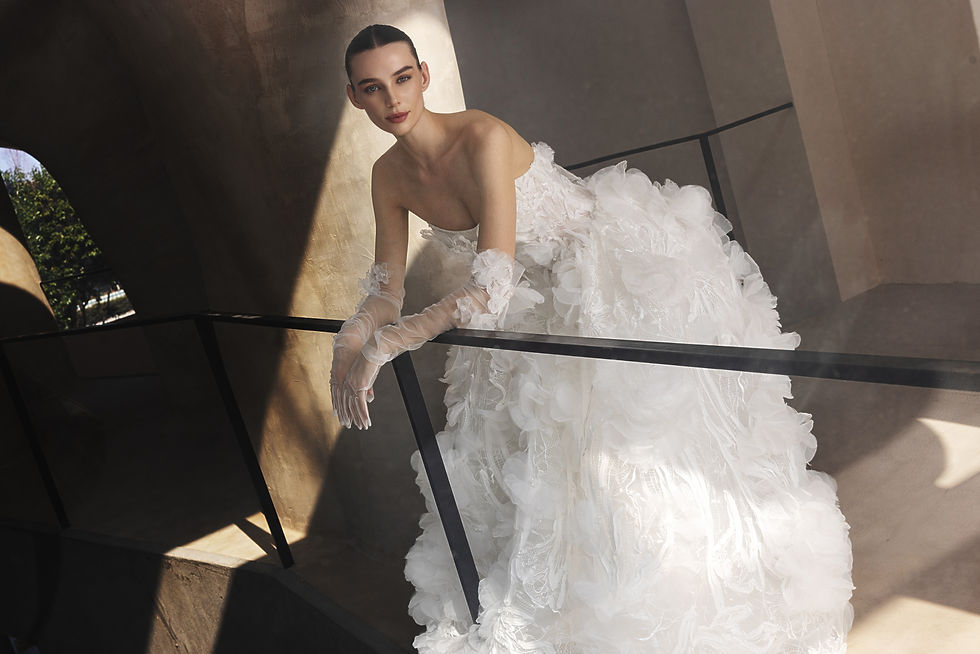
We are a designer-led American bridal brand with French couture influence and in-house development and production support. Our gowns are created with sculpted structure, romantic softness, refined lace, clean lines, and detachable styling details that help boutiques offer brides more than one beautiful look.
But our goal is not simply to show a collection.
Our goal is to help boutiques choose the right pieces for their store.
That may mean a dramatic hero gown that creates social media attention. It may mean a clean commercial style that stylists can sell again and again. It may mean a convertible gown with sleeves, an overskirt, or a cape that helps the bride imagine more than one wedding-day moment.
Every boutique is different.
So the partnership should feel different too.
For us, the best collaboration is not about pushing more dresses into a store.
It is about helping the store build a stronger rack, a clearer point of view, and a more memorable bride experience.
That is the kind of partnership we believe in.
The Future of Bridal Partnership Is More Human
The bridal industry is emotional by nature.
We are not selling office chairs.
We are part of one of the most photographed, most remembered, most family-discussed purchases of a woman’s life.
That deserves care.
And yes, it also deserves business sense.
The future of bridal partnerships will belong to brands and boutiques that can hold both truths at once.
Beauty and reliability.Creativity and communication.Dreams and delivery dates.Romance and sell-through.A gorgeous gown and a clear answer when the boutique asks, “When will it ship?”
That is the new bridal partnership.
Less noise. More care.Less guessing. More listening.Less “Here is our catalog.” More “Let’s find what works for your bride.”
And maybe that sounds simple.
But simple, done well, is rare.
Final Thought: A Designer Should Make Your Boutique Feel Stronger
A boutique owner should never feel like she is carrying the whole partnership alone.
The right designer should bring more than gowns.
They should bring perspective.They should bring support.They should bring beauty that makes sense for real brides.They should bring communication that lowers stress instead of adding to it.They should bring designs that give your stylists better words and your brides better moments.
A bridal boutique is not just a place where dresses hang.
It is where women walk in with nerves, hopes, screenshots, family opinions, and a quiet little dream they may not know how to explain yet.
A good designer respects that.
A good boutique protects that.
And when both sides work together well, the bride feels it.
She may not know why.
But she feels it.
And that is when partnership becomes something more than business.
It becomes part of the memory.
Key Takeaways for Boutique Owners
A strong bridal designer partnership should include original design, clear communication, and practical boutique support.
Designers should understand the boutique floor, not just the runway or lookbook.
Stylists need stories, product details, and emotional selling points to present gowns confidently.
Boutique owners should expect thoughtful recommendations based on their store identity and bride profile.
The best bridal brands care about sell-through, not just the first order.
A modern bridal partnership should help boutiques build a stronger collection, a clearer point of view, and a better bride experience.
FAQ: Bridal Designer Partnership for Boutique Owners
What is a bridal designer partnership?
A bridal designer partnership is the working relationship between a bridal designer or bridal brand and a boutique. A strong partnership includes original gown design, clear communication, product support, styling information, reliable delivery, and thoughtful recommendations based on the boutique’s customer profile.
What should boutique owners expect from bridal designers?
Boutique owners should expect designers to provide more than beautiful gowns. They should expect clear communication, strong fit and construction, useful sales stories, content support, delivery transparency, and guidance on which styles make sense for their boutique.
Why is designer support important for bridal boutiques?
Designer support helps boutiques sell gowns more confidently. When stylists understand the design details, construction, detachable styling options, and bride profile behind each gown, they can create a stronger appointment experience.
How can boutique owners choose the right bridal designer partnership?
Boutique owners should look for designers who understand their store identity, offer original designs, communicate clearly, support stylists, provide reliable production information, and care about long-term sell-through.
What makes Calista Couture different as a bridal designer partner?
Calista Couture is a designer-led American bridal brand with French couture influence and in-house development and production support. The brand focuses on sculpted structure, romantic softness, refined craftsmanship, detachable styling details, and boutique-friendly value for bridal stores.


Comments