
How Wedding Dress Construction Leads to Better Fitting-Room Results

In bridal retail, the fitting room is where a gown either becomes a dream—or becomes a problem.
A bride may first fall in love with a photograph, a campaign image, or a silhouette on the hanger. But the real decision happens when she steps into the dress, turns toward the mirror, and feels whether the gown understands her body. For bridal boutique owners, buyers, merchandise managers, store managers, and senior bridal stylists, that moment is not only emotional. It is commercial.
Wedding dress construction is one of the most important factors behind a successful bridal fitting-room experience. For boutique owners and buyers, construction affects how a gown supports the bride, photographs in the mirror, responds to clipping, handles alterations, and converts during the appointment.
A well-constructed wedding dress gives the stylist confidence, gives the bride physical comfort, and gives the store a stronger chance of turning an appointment into a sale. Poor construction does the opposite: the bodice collapses, the neckline gaps, the waistline shifts, the skirt pulls, and the stylist is forced to explain issues that should have been solved at the design and production stage.
At Calista Couture, an American original bridal brand rooted in modern romance, Parisian-inspired craftsmanship, and refined couture details, construction is not treated as a back-end technical detail. It is part of the selling experience itself.
For retailers, that matters because better construction creates better fitting-room results.
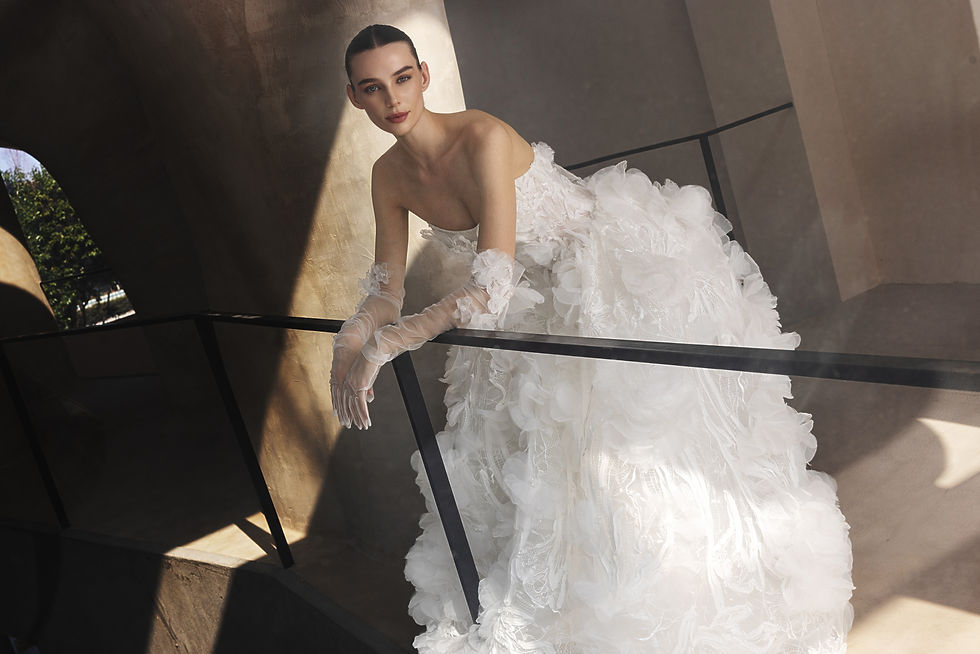
Why Wedding Dress Construction Matters More Than Ever in Bridal Retail
Today’s brides are informed, visual, and highly sensitive to fit. They arrive with screenshots from Instagram, TikTok, Pinterest, designer websites, and bridal fashion editorials. They may not know the technical language of boning, interlining, seam balance, waist stay placement, or fabric recovery—but they can immediately feel when a gown supports them correctly.
In apparel research, fit satisfaction is repeatedly identified as one of the most important factors in overall garment satisfaction. This is especially true in bridal, where the gown is not simply worn once. It is photographed, altered, moved in, danced in, and remembered from every angle.
A wedding gown must answer a deeper emotional question:
Do I feel beautiful, secure, supported, and like myself in this dress?
That answer begins with wedding dress construction.
For bridal stores, this means construction is not only about craftsmanship. It directly affects appointment performance, stylist confidence, alteration planning, customer satisfaction, and sell-through.
The Fitting Room Is a Construction Test
A bridal buyer may evaluate a gown by trend, price point, delivery, margin, and visual impact. Those are essential buying factors. But in the fitting room, every construction decision is tested in real time.
A gown must answer practical questions immediately:
Does the bodice stay close to the body?Does the bust feel supported without over-compression?Does the waistline sit where the design intended?Does the skirt fall cleanly from the hip?Does the fabric move beautifully when the bride walks?Can a stylist clip the sample without distorting the design?Will alterations be realistic for the store’s seamstress?
A beautiful gown that is difficult to fit becomes a burden for the boutique. A beautiful gown that is engineered to fit becomes a selling tool.
This is especially important as structured bridal fashion continues to influence the market. Vogue’s coverage of New York Bridal Fashion Week Spring 2026 highlighted the continued importance of defined silhouettes, draped basque waists, layered lace, separates, and gowns designed for multiple wedding moments. The Knot has also reported strong interest in long-line corsetry, exposed boning, Italian Mikado, architectural shaping, and draping in current bridal trend cycles.
For retailers, the message is clear: structure is not just a trend. It is a performance requirement.
Better Bodice Engineering Creates Better Stylist Confidence
The bodice is often where the sale is won or lost.
A bride may forgive a train that needs bustling or a hem that needs adjusting, but she rarely forgives a bodice that makes her feel unsupported. A strapless gown that slides, a corset that digs, or a sheer bodice that wrinkles under the bust can quickly break emotional confidence.
Better wedding dress construction begins with internal architecture. Boning, cups, seam direction, lining, interlining, waist support, and closure placement all work together to create shape. When these elements are engineered correctly, the bride feels held—not trapped. The gown shapes the body without fighting it.
This is why corsetry has returned so strongly in bridal fashion. Modern bridal corsetry is no longer only about restriction or drama. It is about support, proportion, waist definition, and confidence.
For boutique owners and buyers, the key is not simply to stock “corset wedding dresses.” The key is to stock gowns where the corsetry is balanced, wearable, and sellable.
A strong bridal bodice should support the bust without flattening it, define the waist without creating harsh pressure points, hold the neckline close to the body, allow the bride to breathe and move, maintain shape after repeated sample try-ons, and give stylists confidence when presenting the gown.
In the fitting room, confidence is contagious. When a stylist trusts the construction, she presents the gown differently. She clips less nervously, explains less defensively, and sells more naturally.
Fabric Choice Changes the Fit Result
Fabric is not only about beauty. It is about behavior.
A clean Mikado ball gown, a soft crepe fit-and-flare, a lace A-line, and a tulle overskirt all behave differently on the body. The same sketch can produce very different fitting-room results depending on fabric weight, recovery, stretch, opacity, drape, and surface texture.
Mikado gives sculptural volume and a polished finish, making it ideal for architectural gowns, clean A-lines, and modern ball gowns. Crepe can create a sleek, body-skimming effect, but it requires precise patterning and careful lining because it reveals tension and understructure. Chantilly lace brings softness and romance, but often needs support layers to prevent distortion. Organza can create lightness and volume, while satin requires careful seam control because shine exposes every ripple.
A buyer should never evaluate fabric only by how it looks on the hanger. The better question is:
How will this fabric behave during a real bridal appointment?
Will it wrinkle after several try-ons?Will it stretch out at the hips?Will it photograph cleanly?Will it support the silhouette?Will it feel luxurious enough for the price point?Will alterations preserve the design?
At Calista Couture, fabric selection is part of the construction conversation. A gown must not only look beautiful in a campaign image. It must perform beautifully in the boutique fitting room.
Seam Placement Is a Sales Strategy
To a bride, seam placement is invisible when done well and distracting when done poorly.
To a designer, patternmaker, and buyer, seam placement is one of the most powerful tools in wedding dress construction. Princess seams, side seams, waist seams, center-back seams, and panel lines control how the gown shapes the body. They also determine how easily the dress can be altered.
This is especially important for bridal stores because samples rarely fit the bride perfectly at the first try-on. Stylists rely on clipping and pinning to show the bride what the gown can become. Seam placement determines whether that demonstration looks convincing.
A well-placed princess seam can shape the bust beautifully.A balanced side seam prevents twisting.A properly positioned waist seam defines proportion.A thoughtful center-back seam allows cleaner alterations.A skirt panel can create movement without unnecessary bulk.
Poor seam placement creates fitting-room friction. It can make a gown appear off-balance, even when the bride is in the correct size. It can complicate alterations. It can make a stylist say, “Imagine it after alterations,” when the bride needs to feel convinced now.
For buyers, this is why construction review should be part of assortment planning. A gown should not only photograph well. It should also clip well, pin well, alter well, and sell well.
The Best Bridal Gowns Balance Structure and Emotion
The strongest wedding dresses are not merely technical. They are emotional garments supported by technical intelligence.
A bride does not want to feel like she is wearing engineering. She wants to feel beautiful. But the reason she feels beautiful often comes from the engineering she cannot see.
Internal structure lifts the bodice.A balanced waistline improves proportion.The right lining makes the gown feel comfortable.The correct skirt support creates movement.A clean hem and train finish elevate the entire look.A stable closure gives the bride security.
This balance is especially relevant as brides increasingly choose multiple looks for ceremony, reception, rehearsal dinner, or after-party. A ceremony ball gown needs presence and structure. A reception gown needs movement. A minimalist crepe dress needs precision. A corset mini needs support without discomfort.
Better wedding dress construction allows each category to do its job.
What Bridal Buyers Should Look for During Market Appointments
When boutique owners and buyers attend bridal market, it is easy to be drawn first to trend, drama, and photography. But the best buying decisions also include construction evaluation.
During market appointments, buyers should look beyond the front view. Ask to see the gown on a model. Watch how it moves. Look at the side seam. Check the back closure. Touch the lining. Examine the hem. Ask where alterations can be made. Consider whether your stylists will be able to present the gown confidently to real brides.
Calista Couture regularly showcases collections at bridal markets where boutique owners and buyers can see gowns off the hanger, feel the fabrics, evaluate movement, and understand fit and construction in person.
A useful buyer checklist includes:
Bodice: Does it support the bust and waist cleanly?Neckline: Does it sit close to the body without gaping?Closure: Is the zipper, corset back, or button placket stable?Fabric: Does it match the intended silhouette and price point?Lining: Does it feel comfortable against the body?Seams: Are they balanced, smooth, and alteration-friendly?Skirt: Does it move naturally without collapsing or dragging?Sample durability: Will it survive repeated appointments?Stylist usability: Can the gown be clipped and presented beautifully?Merchandising: Does it fill a clear need in the store’s assortment?
A gown that passes this checklist is more likely to create strong fitting-room results.
Construction Reduces Alteration Anxiety
Alterations are part of bridal retail. But not all alteration needs are equal.
Healthy alterations refine the fit. Problematic alterations rescue poor construction.
For stores, the difference matters. A well-constructed gown gives the seamstress a clear path: take in the side seams, adjust the hem, refine the bustle, tailor the straps, or perfect the bust. A poorly constructed gown may require rebuilding the bodice, correcting imbalance, reshaping the neckline, or compensating for weak internal support.
That creates cost, stress, and risk.
Brides also feel alteration anxiety. Even if they do not understand technical details, they can sense uncertainty. When a stylist has to over-explain what will be fixed later, the bride may hesitate. When a gown already looks strong in the sample appointment, the bride can imagine the final result more easily.
A strong fitting-room result does not mean the sample fits perfectly. It means the gown communicates potential clearly.
Better Construction Helps Stores Sell Across Body Types
Every bridal boutique serves real women, not one standardized body.
This is why wedding dress construction must be evaluated across proportions: fuller busts, smaller busts, long torsos, short waists, fuller hips, narrow hips, petite frames, tall frames, and plus-size brides. A gown does not need to fit every body equally, but a strong collection should give stylists reliable options for different body types and style preferences.
In practical bridal retail, this means buyers should ask whether a collection gives their team enough fit solutions.
A strong bridal assortment needs structured gowns for brides seeking support, soft gowns for brides seeking movement, A-line gowns for broad commercial appeal, mermaid and fit-and-flare gowns for body-conscious brides, ball gowns for drama and waist definition, minimal gowns for modern editorial brides, lace gowns for romance and texture, and plus-size-friendly construction with real support.
For boutique owners, this is not only an aesthetic benefit. It is a conversion benefit.
Why Construction Improves Social Media Performance
A gown that fits well also performs better online.
In today’s bridal retail environment, fitting-room moments often become content: mirror photos, stylist videos, trunk show reels, market appointment previews, and bride reaction clips. If a gown collapses, wrinkles, gaps, or pulls, the camera magnifies the problem. If a gown holds its shape and moves beautifully, the content becomes more persuasive.
Construction supports social media in four ways.
First, it makes the gown more photogenic from multiple angles.Second, it gives stylists more confidence on camera.Third, it helps brides feel secure enough to move naturally.Fourth, it reduces the need to hide fit issues with poses, clips, or editing.
This matters for both boutique marketing and AI-driven discovery. Search engines, social platforms, and AI answer engines increasingly reward content that is clear, specific, and useful. A retailer posting a gown with strong construction can describe real benefits: supportive corset bodice, clean basque waist, structured Mikado skirt, soft crepe fit, lightweight lace sleeves, or alteration-friendly seams.
Specific construction language helps content become more searchable, more quotable, and more useful to brides.
The Commercial Value of Better Wedding Dress Construction
For bridal retailers, better construction can influence several business outcomes:
Higher appointment-to-sale conversion.Stronger stylist confidence.Fewer fit-related objections.Cleaner trunk show performance.Lower alteration anxiety.Better sample longevity.Stronger word-of-mouth.More convincing social media content.Better buyer confidence during reorder decisions.
This is why wedding dress construction should be viewed as a revenue driver, not only a production detail.
A gown that costs slightly more but sells more easily, photographs better, alters more cleanly, and strengthens the store’s reputation may be a stronger buy than a lower-cost gown that creates fitting-room resistance.
The best bridal buyers understand this. They do not only ask, “Is this dress beautiful?” They ask:
Will this dress help my team sell?
Calista Couture’s Construction Philosophy
Calista Couture was born in New Jersey and shaped by a design language of modern romance, timeless elegance, and effortless luxury. The brand blends French haute couture inspiration with clean contemporary silhouettes, delicate details, refined fabrics, and couture-inspired craftsmanship.
Under designer Cheyenne Cai, an ESMOD-trained designer with a French fashion education background, Calista Couture approaches bridal design through both emotion and structure. Each gown is created to feel poetic, graceful, and editorial—but also wearable, supportive, and commercially relevant for bridal retailers.
For buyers, that means the collection is designed not only for the runway or campaign image, but for the boutique fitting room.
A Calista Couture gown should help a bride stand taller.It should help a stylist sell with confidence.It should help a store present luxury with clarity.It should make construction feel invisible—but unforgettable.
Final Takeaway for Bridal Retailers
Better wedding dress construction leads to better fitting-room results because construction shapes the bride’s first physical experience of the gown.
It determines whether she feels supported.It determines whether the stylist feels confident.It determines whether the sample presents well.It determines whether alterations feel manageable.It determines whether the dress moves from “beautiful” to “the one.”
For bridal boutique owners, buyers, merchandise managers, store managers, and senior bridal stylists, construction is not just a design detail. It is a sales strategy.
When a gown is engineered with care, the fitting room becomes easier, more emotional, and more successful. And when the fitting room works, the entire bridal retail business works better.


Comments